Save the Little Fish

Aquarium plants

The plant list

44 plants, each with the light it needs, whether it needs CO₂, where it goes in a tank and which fish will eat it. Plants soak up ammonia, crowd out algae and give shy fish and fry somewhere to hide.

Where it goes:
Kind:

The plants 44 plants

African water fern

African water fern

Plant · RhizomeSome care

  • Medium light
  • CO₂ helps
  • Slow growth
  • On wood, rock
  • 22–26°C

Dark, see-through fronds give cover and suit river-style tanks.

Tropical Africa

African water fern

Bolbitis heudelotii

Tropical Africa

Temperature
22–26°C
pH
6–7
Height
6–16 in · 15–40 cm
Light
Medium
CO₂
Helps
Growth
Slow
Goes
On wood or rock
Difficulty
Some care

More plants. Split the creeping rhizome.

Almost nothing eats its tough fronds; plecos and cichlids usually leave it alone.

Photo: Tsunamicarlos, Public domain

Alternanthera reineckii

Alternanthera reineckii

Plant · StemSome care

  • Bright light!
  • CO₂ helps
  • Steady growth
  • Middle
  • 18–26°C

Pink to red leaves make a colour contrast among green plants.

South America

Alternanthera reineckii

Alternanthera reineckii

South America

Temperature
18–26°C
pH
6–7
Height
10–20 in · 25–50 cm
Light
High
CO₂
Helps
Growth
Medium
Goes
Middle
Difficulty
Some care

More plants. Pinch off the top and plant it; the old stem branches out.

Goldfish, silver dollars and some plecos chew its soft leaves.

Photo: Rchampagne, Public domain

Amazon frogbit

Amazon frogbit

Plant · FloatingEasy

  • Low light
  • No CO₂
  • Fast growth
  • Floats
  • 20–27°C

Long dangling roots shelter fry, bettas and gouramis, and the plant soaks up nitrate fast.

Central and South America

Amazon frogbit

Limnobium laevigatum

Central and South America

Temperature
20–27°C
pH
5–8
Height
2–6 in · 5–15 cm
Light
Low
CO₂
Not needed
Growth
Fast
Goes
Floating
Difficulty
Easy

More plants. Sends out runners with new plants that break off on their own.

Goldfish and some snails eat the spongy leaves; strong filter flow pushes it under and kills it.

Photo: Cardex, Public domain

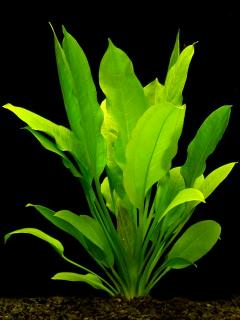
Amazon sword

Amazon sword

Plant · RosetteEasy

  • Low light
  • No CO₂
  • Steady growth
  • Middle
  • 20–28°C

A big, classic centrepiece whose broad leaves give shade and are used by angelfish and other egg-layers for spawning.

Central and South America

Amazon sword

Echinodorus grisebachii 'Bleherae'

Central and South America

Temperature
20–28°C
pH
6–8
Height
8–20 in · 20–50 cm
Light
Low
CO₂
Not needed
Growth
Medium
Goes
Middle
Difficulty
Easy

More plants. Baby plants grow on long flower stems; let them root, then cut them free and plant them.

Goldfish, silver dollars and large cichlids tear or uproot it, and some plecos rasp holes in the leaves.

Photo: Salvatore vitale, Public domain

Ambulia

Ambulia

Plant · StemEasy

  • Medium light
  • CO₂ helps
  • Fast growth
  • Back
  • 22–26°C

Its soft, feathery stems give fry and small fish cover and soak up nutrients that algae would use.

South and Southeast Asia

Ambulia

Limnophila sessiliflora

South and Southeast Asia

Temperature
22–26°C
pH
6–7.5
Height
6–16 in · 15–40 cm
Light
Medium
CO₂
Helps
Growth
Fast
Goes
Back
Difficulty
Easy

More plants. Cut off the top of a stem and push it into the substrate; it also sends out runners.

Goldfish, silver dollars and other plant-eating fish will graze the soft leaves.

Photo: kajuko, CC BY-SA 3.0

Anacharis

Anacharis

Plant · StemEasy

  • Medium light
  • No CO₂
  • Fast growth
  • Back
  • 16–24°C

Fast growth soaks up nutrients and helps keep algae down in a new tank.

Southeastern South America (Brazil, Argentina, Uruguay)

Anacharis

Elodea densa

Southeastern South America (Brazil, Argentina, Uruguay)

Temperature
16–24°C
pH
6–8
Height
16–39 in · 40–100 cm
Light
Medium
CO₂
Not needed
Growth
Fast
Goes
Back
Difficulty
Easy

More plants. Cut a piece of stem and plant it or let it float; it roots anywhere.

Goldfish, silver dollars, many cichlids and crayfish eat it readily.

Photo: Ernst Schütte, CC BY-SA 3.0

Anubias barteri

Anubias barteri

Plant · RhizomeEasy

  • Low light
  • No CO₂
  • Slow growth
  • On wood, rock
  • 22–26°C

Tough leaves give shade and spawning spots and survive plecos and cichlids.

West Africa (Nigeria, Cameroon, Bioko)

Anubias barteri

Anubias barteri var. barteri

West Africa (Nigeria, Cameroon, Bioko)

Temperature
22–26°C
pH
6–7.5
Height
10–18 in · 25–45 cm
Light
Low
CO₂
Not needed
Growth
Slow
Goes
On wood or rock
Difficulty
Easy

More plants. Cut the rhizome into pieces with a few leaves each.

Herbivorous fish leave its tough leaves alone; big cichlids may uproot it.

Photo: Tocekas, CC BY-SA 3.0

Anubias nana

Anubias nana

Plant · RhizomeEasy

  • Low light
  • No CO₂
  • Slow growth
  • On wood, rock
  • 22–28°C

Tough, low leaves that bottom fish and plecos rest on and that do well in shady corners.

West Africa (Cameroon)

Anubias nana

Anubias barteri var. nana

West Africa (Cameroon)

Temperature
22–28°C
pH
5–8
Height
2–6 in · 5–15 cm
Light
Low
CO₂
Not needed
Growth
Slow
Goes
On wood or rock
Difficulty
Easy

More plants. Cut the rhizome into pieces with a few leaves each.

Almost nothing eats it, so it is a top choice for cichlid, goldfish and pleco tanks.

Photo: Krzysztof Ziarnek, Kenraiz, CC BY-SA 4.0

Aponogeton crispus

Aponogeton crispus

Plant · BulbEasy

  • Medium light
  • No CO₂
  • Fast growth
  • Back
  • 24–30°C

Long wavy leaves fill the back of a big tank and often flower in the aquarium.

Sri Lanka, India and Bangladesh

Aponogeton crispus

Aponogeton crispus

Sri Lanka, India and Bangladesh

Temperature
24–30°C
pH
6–7.5
Height
12–24 in · 30–60 cm
Light
Medium
CO₂
Not needed
Growth
Fast
Goes
Back
Difficulty
Easy

More plants. Split the bulb or grow it from seed after it flowers.

Goldfish, silver dollars and some cichlids eat the soft leaves; plecos may rasp them.

Photo: Drhyperlaur at English Wikipedia, Public domain

Bacopa caroliniana

Bacopa caroliniana

Plant · StemEasy

  • Medium light
  • No CO₂
  • Slow growth
  • Middle
  • 20–26°C

A tidy, upright plant that rarely needs trimming and gives mid-water fish cover.

Southeastern United States

Bacopa caroliniana

Bacopa caroliniana

Southeastern United States

Temperature
20–26°C
pH
5–7.5
Height
4–12 in · 10–30 cm
Light
Medium
CO₂
Not needed
Growth
Slow
Goes
Middle
Difficulty
Easy

More plants. Cut a side shoot or the top of a stem and plant it.

Goldfish and plant-eating cichlids may nibble it; most fish leave its thick leaves alone.

Photo: Krzysztof Ziarnek, Kenraiz, CC BY-SA 4.0

Banana plant

Banana plant

Plant · LilyEasy

  • Medium light
  • CO₂ helps
  • Slow growth
  • Front
  • 20–26°C

An unusual, eye-catching plant that gives some shade under its round leaves.

Southeastern United States

Banana plant

Nymphoides aquatica

Southeastern United States

Temperature
20–26°C
pH
6.5–7.2
Height
4–12 in · 10–30 cm
Light
Medium
CO₂
Helps
Growth
Slow
Goes
Front
Difficulty
Easy

More plants. Grows new plants from runners, or split the root cluster.

Goldfish, silver dollars and snails may eat the leaves and the bananas.

Photo: Show_ryu, Public domain

Bucephalandra

Bucephalandra

Plant · RhizomeEasy

  • Low light
  • No CO₂
  • Slow growth
  • On wood, rock
  • 20–26°C

Small, colourful leaves that suit nano tanks and rocky scapes and give shrimp a grazing surface.

Borneo

Bucephalandra

Bucephalandra

Borneo

Temperature
20–26°C
pH
5–7
Height
2–4 in · 5–10 cm
Light
Low
CO₂
Not needed
Growth
Slow
Goes
On wood or rock
Difficulty
Easy

More plants. Cut the rhizome into pieces with a few leaves each.

Almost nothing eats it, though pieces can be knocked loose by digging fish.

Photo: Manuel Werner, CC BY 4.0

Cabomba

Cabomba

Plant · StemSome care

  • Bright light!
  • CO₂ helps
  • Fast growth
  • Back
  • 20–25°C

Fine, fan-shaped leaves make a soft hiding place for fry and small fish.

Southeastern South America and the eastern and western United States

Cabomba

Cabomba caroliniana

Southeastern South America and the eastern and western United States

Temperature
20–25°C
pH
6–7
Height
12–24 in · 30–60 cm
Light
High
CO₂
Helps
Growth
Fast
Goes
Back
Difficulty
Some care

More plants. Cut off stem tops and replant them; cut stems are slow to branch.

Goldfish, silver dollars and many cichlids shred the delicate leaves.

Photo: Leslie J. Mehrhoff, University of Connecticut, Bugwood.org, CC BY 3.0

Christmas moss

Christmas moss

Plant · MossSome care

  • Medium light
  • CO₂ helps
  • Slow growth
  • On wood, rock
  • 20–28°C

A neat, tree-shaped moss that fry and shrimp hide and graze in.

Asia and Australia

Christmas moss

Vesicularia montagnei

Asia and Australia

Temperature
20–28°C
pH
5–7
Height
0.4–1.2 in · 1–3 cm
Light
Medium
CO₂
Helps
Growth
Slow
Goes
On wood or rock
Difficulty
Some care

More plants. Cut off a piece and tie it onto wood or rock.

Rarely eaten, though goldfish and big fish may pick at it.

Photo: Storm from Canada, CC BY-SA 2.0

Cryptocoryne parva

No photo yet

Plant · RosetteEasy

  • Medium light
  • No CO₂
  • Slow growth
  • Front
  • 22–28°C

Makes a low, grassy patch in the foreground that bottom fish can root through.

Sri Lanka

Cryptocoryne parva

Cryptocoryne parva

Sri Lanka

Temperature
22–28°C
pH
6–7.5
Height
1.2–2.4 in · 3–6 cm
Light
Medium
CO₂
Not needed
Growth
Slow
Goes
Front
Difficulty
Easy

More plants. Sends out runners with small plantlets you can separate.

Rarely eaten, but digging fish like big cichlids and goldfish can uproot it.

Cryptocoryne wendtii

Cryptocoryne wendtii

Plant · RosetteEasy

  • Low light
  • No CO₂
  • Steady growth
  • Middle
  • 22–28°C

A hardy low-light plant whose leaves give cover to bottom fish and shrimp.

Sri Lanka

Cryptocoryne wendtii

Cryptocoryne wendtii

Sri Lanka

Temperature
22–28°C
pH
5–8
Height
4–12 in · 10–30 cm
Light
Low
CO₂
Not needed
Growth
Medium
Goes
Middle
Difficulty
Easy

More plants. Sends out runners under the gravel; dig up the new plants and replant them.

Rarely eaten, but goldfish, big cichlids and digging fish can uproot it.

Photo: Haplochromis, CC BY 2.5

Downoi

Downoi

Plant · StemSome care

  • Medium light
  • CO₂ helps
  • Steady growth
  • Front
  • 20–25°C

Curly star-shaped leaves form a compact, unusual foreground patch.

Thailand and Myanmar

Downoi

Pogostemon helferi

Thailand and Myanmar

Temperature
20–25°C
pH
6–7.5
Height
2–4 in · 5–10 cm
Light
Medium
CO₂
Helps
Growth
Medium
Goes
Front
Difficulty
Some care

More plants. Cut off side shoots once they have small roots and replant them.

Mostly left alone; goldfish and digging cichlids may uproot it.

Photo: S.Tanaka, Public domain

Duckweed

Duckweed

Plant · FloatingEasy

  • Low light
  • No CO₂
  • Fast growth
  • Floats
  • 6–30°C

Shades the tank, gives fry cover and soaks up nitrate.

Nearly worldwide, including Canada

Duckweed

Lemna minor

Nearly worldwide, including Canada

Temperature
6–30°C
pH
6.5–8
Height
0.4–0.8 in · 1–2 cm
Light
Low
CO₂
Not needed
Growth
Fast
Goes
Floating
Difficulty
Easy

More plants. Each tiny leaf splits into new plants on its own.

Goldfish, koi, silver dollars and many other plant-eating fish eat it.

Photo: Kostka Martin, CC0

Dwarf baby tears

No photo yet

Plant · CarpetHard

  • Bright light!
  • Needs CO₂!
  • Steady growth
  • Front
  • 22–26°C

Makes the classic bright green lawn in small aquascapes.

Cuba

Dwarf baby tears

Micranthemum callitrichoides 'Cuba'

Cuba

Temperature
22–26°C
pH
6–7
Height
0.4–2 in · 1–5 cm
Light
High
CO₂
Needed
Growth
Medium
Goes
Front
Difficulty
Hard

More plants. Plant small clumps; runners spread into a carpet.

Not eaten much, but digging fish, plecos and crayfish pull it up easily.

Dwarf hairgrass

Dwarf hairgrass

Plant · CarpetSome care

  • Medium light
  • CO₂ helps
  • Steady growth
  • Front
  • 20–25°C

A grassy lawn where shrimp and small bottom fish forage.

Worldwide, including Canada

Dwarf hairgrass

Eleocharis acicularis

Worldwide, including Canada

Temperature
20–25°C
pH
5–7.5
Height
2.4–6 in · 6–15 cm
Light
Medium
CO₂
Helps
Growth
Medium
Goes
Front
Difficulty
Some care

More plants. Pull the clump into small bunches and plant them a few centimetres apart; runners fill the gaps.

Goldfish, cichlids and digging fish such as loaches and corydoras can pull it out before it roots.

Photo: Krzysztof Ziarnek, Kenraiz, CC BY-SA 4.0

Dwarf hygrophila

Dwarf hygrophila

Plant · StemEasy

  • Low light
  • No CO₂
  • Fast growth
  • Back
  • 22–28°C

Fast, hardy cover that soaks up nitrate and helps new tanks fight algae.

India and Southeast Asia

Dwarf hygrophila

Hygrophila polysperma

India and Southeast Asia

Temperature
22–28°C
pH
5–8
Height
10–16 in · 25–40 cm
Light
Low
CO₂
Not needed
Growth
Fast
Goes
Back
Difficulty
Easy

More plants. Cut off stem tops and plant them; even loose leaves can grow into new plants.

Goldfish, silver dollars and plant-eating cichlids eat the soft tops.

Photo: Pinpin (Wikimedia Commons user), CC BY-SA 3.0

Dwarf sagittaria

Dwarf sagittaria

Plant · Grass-likeEasy

  • Low light
  • CO₂ helps
  • Steady growth
  • Front
  • 18–28°C

An easy grassy foreground that copes with harder water and gives small fish and shrimp cover.

Eastern North America and South America

Dwarf sagittaria

Sagittaria subulata

Eastern North America and South America

Temperature
18–28°C
pH
5–9
Height
2–12 in · 5–30 cm
Light
Low
CO₂
Helps
Growth
Medium
Goes
Front
Difficulty
Easy

More plants. Sends out short runners with new plants; cut and replant them.

Goldfish and digging cichlids uproot or chew it; most community fish ignore it.

Photo: Daderot, CC0

Hornwort

Hornwort

Plant · StemEasy

  • Low light
  • No CO₂
  • Fast growth
  • Back
  • 10–30°C

A thick, fast hiding place for fry and shrimp that helps keep nitrate and algae down.

Worldwide, including Canada

Hornwort

Ceratophyllum demersum

Worldwide, including Canada

Temperature
10–30°C
pH
6–9
Height
8–31 in · 20–80 cm
Light
Low
CO₂
Not needed
Growth
Fast
Goes
Back
Difficulty
Easy

More plants. Snap off a piece of stem and let it float or push it into the gravel; it branches on its own.

Goldfish, silver dollars and big cichlids will graze it, but its stiff needles keep most fish off.

Photo: S.Tanaka, Public domain

Hydrocotyle tripartita

Hydrocotyle tripartita

Plant · StemEasy

  • Medium light
  • CO₂ helps
  • Fast growth
  • Front
  • 20–28°C

A fast, clover-like carpet that fills in quickly and shelters shrimp and fry.

Australia and New Zealand; aquarium form came via Southeast Asia

Hydrocotyle tripartita

Hydrocotyle tripartita

Australia and New Zealand; aquarium form came via Southeast Asia

Temperature
20–28°C
pH
6–7.5
Height
2–4 in · 5–10 cm
Light
Medium
CO₂
Helps
Growth
Fast
Goes
Front
Difficulty
Easy

More plants. Cut off runners and replant them.

Goldfish and silver dollars eat it; digging fish uproot it.

Photo: Harry Rose from South West Rocks, Australia, CC BY 2.0

Indian almond leaves

Indian almond leaves

Plant · BotanicalEasy

  • Low light
  • No CO₂
  • Slow growth
  • Floats

Tea-coloured water that bettas, plecos and other blackwater fish like, plus a surface that shrimp and fry graze.

Tropical Asia, Australia and the Pacific

Indian almond leaves

Terminalia catappa

Tropical Asia, Australia and the Pacific

Light
Low
CO₂
Not needed
Growth
Slow
Goes
Floating
Difficulty
Easy

More plants. It does not grow in a tank; buy dried leaves and add a new one when the old one breaks down.

Shrimp, snails and plecos slowly eat the softened leaf.

Photo: Irvin calicut, CC BY-SA 3.0

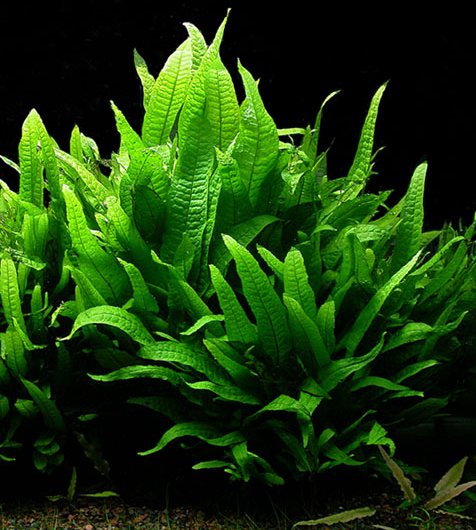
Java fern

Java fern

Plant · RhizomeEasy

  • Low light
  • No CO₂
  • Slow growth
  • On wood, rock
  • 20–28°C

Shy fish and fry hide in it; its tough leaves survive tanks where other plants get eaten.

Southeast Asia

Java fern

Microsorum pteropus

Southeast Asia

Temperature
20–28°C
pH
5–8
Height
6–12 in · 15–30 cm
Light
Low
CO₂
Not needed
Growth
Slow
Goes
On wood or rock
Difficulty
Easy

More plants. Plantlets grow on old leaves; split the rhizome.

Almost nothing eats it, even goldfish and cichlids, though plecos may graze algae off the leaves.

Photo: Tsunamicarlos (English Wikipedia), Public domain

Java moss

Java moss

Plant · MossEasy

  • Low light
  • No CO₂
  • Steady growth
  • On wood, rock
  • 20–30°C

The best fry and shrimp nursery there is: babies hide in it and graze the tiny food that grows on it.

Southeast Asia

Java moss

Taxiphyllum barbieri

Southeast Asia

Temperature
20–30°C
pH
5–8
Height
1.2–4 in · 3–10 cm
Light
Low
CO₂
Not needed
Growth
Medium
Goes
On wood or rock
Difficulty
Easy

More plants. Pull or cut off a clump and tie it somewhere new.

Almost nothing eats it; goldfish may pick at it and it can clog filter intakes.

Photo: Soulkeeper (Wikimedia Commons user), CC BY-SA 3.0

Lilaeopsis brasiliensis

Lilaeopsis brasiliensis

Plant · Grass-likeSome care

  • Medium light
  • CO₂ helps
  • Slow growth
  • Front
  • 18–26°C

Forms a short grassy lawn; it even handles a little salt.

South America

Lilaeopsis brasiliensis

Lilaeopsis brasiliensis

South America

Temperature
18–26°C
pH
6–7.5
Height
1.6–2.8 in · 4–7 cm
Light
Medium
CO₂
Helps
Growth
Slow
Goes
Front
Difficulty
Some care

More plants. Spreads by runners; split off clumps and replant.

Rarely eaten, but goldfish and digging cichlids uproot it.

Photo: Daderot, CC0

Ludwigia repens

Ludwigia repens

Plant · StemEasy

  • Medium light
  • CO₂ helps
  • Steady growth
  • Back
  • 22–26°C

Adds red colour to a background and gives cover to mid-water fish.

North and Central America

Ludwigia repens

Ludwigia repens

North and Central America

Temperature
22–26°C
pH
5–7.5
Height
8–20 in · 20–50 cm
Light
Medium
CO₂
Helps
Growth
Medium
Goes
Back
Difficulty
Easy

More plants. Cut off the top of a stem and plant it.

Goldfish, silver dollars and plant-eating cichlids eat it.

Photo: Show_ryu, Public domain

Marimo moss ball

Marimo moss ball

Plant · Algae ballEasy

  • Low light
  • No CO₂
  • Slow growth
  • Front
  • 15–24°C

A slow, tidy decoration that shrimp graze on.

Cool lakes of the Northern Hemisphere (Japan, Iceland, northern Europe)

Marimo moss ball

Aegagropila linnaei

Cool lakes of the Northern Hemisphere (Japan, Iceland, northern Europe)

Temperature
15–24°C
pH
6–8.5
Height
1.2–4 in · 3–10 cm
Light
Low
CO₂
Not needed
Growth
Slow
Goes
Front
Difficulty
Easy

More plants. Pull a ball apart into pieces; each one slowly rolls back into a ball.

Goldfish and some plecos pick it apart, and big fish can break it up.

Photo: Piotr719, CC BY-SA 3.0

Monte Carlo

Monte Carlo

Plant · CarpetSome care

  • Medium light
  • CO₂ helps
  • Steady growth
  • Front
  • 20–28°C

A bright green lawn in the foreground that shrimp love to pick through.

Argentina, southern Brazil and Uruguay

Monte Carlo

Micranthemum tweediei

Argentina, southern Brazil and Uruguay

Temperature
20–28°C
pH
6–7.5
Height
1.2–2 in · 3–5 cm
Light
Medium
CO₂
Helps
Growth
Medium
Goes
Front
Difficulty
Some care

More plants. Pull apart small clumps or replant trimmings and they spread as a carpet.

Digging fish and goldfish uproot it; most small community fish leave it alone.

Photo: Yercaud-elango, CC BY 4.0

Ozelot sword

Ozelot sword

Plant · RosetteEasy

  • Medium light
  • No CO₂
  • Steady growth
  • Middle
  • 20–28°C

A big spotted rosette that makes a centrepiece and shade for fish.

Cultivar (hybrid bred in Germany)

Ozelot sword

Echinodorus 'Ozelot'

Cultivar (hybrid bred in Germany)

Temperature
20–28°C
pH
6–7
Height
8–20 in · 20–50 cm
Light
Medium
CO₂
Not needed
Growth
Medium
Goes
Middle
Difficulty
Easy

More plants. Plantlets on the flower stalk or splitting the rhizome, though both are rare in tanks.

Silver dollars and goldfish chew it; large cichlids may dig it up.

Photo: Marrabbio2, CC BY-SA 3.0

Pearlweed

Pearlweed

Plant · StemEasy

  • Medium light
  • CO₂ helps
  • Fast growth
  • Middle
  • 20–28°C

Dense little bushes give fry and shrimp lots of places to hide.

Florida, United States

Pearlweed

Micranthemum glomeratum

Florida, United States

Temperature
20–28°C
pH
6–7.5
Height
4–8 in · 10–20 cm
Light
Medium
CO₂
Helps
Growth
Fast
Goes
Middle
Difficulty
Easy

More plants. Cut stems and replant the tops.

Goldfish and silver dollars eat it; most community fish leave it alone.

Photo: Obsidian Soul, CC0

Pothos

Pothos

Plant · HouseplantEasy

  • Low light
  • No CO₂
  • Steady growth
  • Floats
  • 17–30°C

Its roots pull nitrate out of the water, and fry hide in the root mat.

Mo'orea, French Polynesia

Pothos

Epipremnum aureum

Mo'orea, French Polynesia

Temperature
17–30°C
pH
6–7.5
Height
8–39 in · 20–100 cm
Light
Low
CO₂
Not needed
Growth
Medium
Goes
Floating
Difficulty
Easy

More plants. Cut a piece of vine with a node and put it in water to grow roots.

Fish can't reach the leaves; goldfish and big cichlids may nibble the roots.

Photo: AnonyManx, CC BY-SA 4.0

Red root floater

Red root floater

Plant · FloatingEasy

  • Medium light
  • No CO₂
  • Steady growth
  • Floats
  • 22–28°C

Gives shade and cover near the surface, and fry hide in the red roots.

Amazon basin, South America

Red root floater

Phyllanthus fluitans

Amazon basin, South America

Temperature
22–28°C
pH
6–7.5
Height
1.2–2 in · 3–5 cm
Light
Medium
CO₂
Not needed
Growth
Medium
Goes
Floating
Difficulty
Easy

More plants. Pull apart a cluster and the pieces keep growing.

Goldfish and other plant-eating fish nibble it; most tropical community fish leave it alone.

Photo: Monarchatto, CC BY-SA 4.0

Riccia

Riccia

Plant · LiverwortEasy

  • Medium light
  • CO₂ helps
  • Fast growth
  • Floats
  • 20–27°C

A classic fry nursery: thick floating mats hide babies and grow tiny food.

Nearly worldwide

Riccia

Riccia fluitans

Nearly worldwide

Temperature
20–27°C
pH
6–7.5
Height
0.4–2 in · 1–5 cm
Light
Medium
CO₂
Helps
Growth
Fast
Goes
Floating
Difficulty
Easy

More plants. Any broken piece grows into a new clump.

Goldfish and other plant-eaters graze it; livebearers pick at it.

Photo: Piotr Kuczynski, CC BY-SA 3.0

Rotala rotundifolia

Rotala rotundifolia

Plant · StemEasy

  • Medium light
  • CO₂ helps
  • Steady growth
  • Back
  • 22–28°C

A soft, bushy background that small fish and shrimp love to weave through.

Southeast Asia

Rotala rotundifolia

Rotala rotundifolia

Southeast Asia

Temperature
22–28°C
pH
5–8
Height
6–12 in · 15–30 cm
Light
Medium
CO₂
Helps
Growth
Medium
Goes
Back
Difficulty
Easy

More plants. Cut off the top few centimetres of a stem and plant it; the old stem branches too.

Goldfish, silver dollars and plant-eating cichlids will mow it down; most community fish leave it alone.

Photo: Krzysztof Ziarnek, Kenraiz, CC BY-SA 4.0

Salvinia

Salvinia

Plant · FloatingEasy

  • Low light
  • No CO₂
  • Fast growth
  • Floats
  • 20–28°C

Shades the tank, fights algae by eating nutrients, and gives surface fish and fry cover.

Central and South America

Salvinia

Salvinia minima

Central and South America

Temperature
20–28°C
pH
5–8
Height
0.4–1.2 in · 1–3 cm
Light
Low
CO₂
Not needed
Growth
Fast
Goes
Floating
Difficulty
Easy

More plants. Chains of leaves break apart on their own and each piece keeps growing.

Goldfish and some plant-eating fish nibble it; strong flow and condensation from a tight lid can damage it.

Photo: Krzysztof Ziarnek, Kenraiz, CC BY-SA 4.0

Staurogyne repens

Staurogyne repens

Plant · StemEasy

  • Medium light
  • CO₂ helps
  • Steady growth
  • Front
  • 22–28°C

A tough, bright green low bush for the front of the tank.

Brazil

Staurogyne repens

Staurogyne repens

Brazil

Temperature
22–28°C
pH
6–7.5
Height
2–4 in · 5–10 cm
Light
Medium
CO₂
Helps
Growth
Medium
Goes
Front
Difficulty
Easy

More plants. Cut side shoots and replant them.

Mostly left alone; goldfish and silver dollars may nibble it.

Photo: 호로조, CC BY-SA 3.0

Tiger lotus

Tiger lotus

Plant · LilyEasy

  • Medium light
  • No CO₂
  • Steady growth
  • Middle
  • 22–28°C

Big spotted leaves make a bold centrepiece and give fish shade.

West Africa

Tiger lotus

Nymphaea lotus

West Africa

Temperature
22–28°C
pH
6–7.5
Height
8–31 in · 20–80 cm
Light
Medium
CO₂
Not needed
Growth
Medium
Goes
Middle
Difficulty
Easy

More plants. Grows from a bulb that sends out runners with new plants.

Goldfish, silver dollars and large cichlids may chew or uproot it.

Photo: Krzysztof Ziarnek, Kenraiz, CC BY-SA 4.0

Vallisneria

Vallisneria

Plant · Grass-likeEasy

  • Low light
  • No CO₂
  • Fast growth
  • Back
  • 20–28°C

Fast tall grass that makes a quick background wall, uses up nitrate and gives fish a calm place to rest.

Europe, North Africa and Asia

Vallisneria

Vallisneria spiralis

Europe, North Africa and Asia

Temperature
20–28°C
pH
6–8
Height
12–20 in · 30–50 cm
Light
Low
CO₂
Not needed
Growth
Fast
Goes
Back
Difficulty
Easy

More plants. Sends out runners with baby plants; cut them off once they have roots and replant.

Goldfish and big cichlids chew it and may uproot it; it also melts with some medicines and liquid carbon.

Photo: Lamiot, CC BY-SA 4.0

Water lettuce

Water lettuce

Plant · FloatingEasy

  • Medium light
  • No CO₂
  • Fast growth
  • Floats
  • 22–30°C

Long hanging roots give fry and shy fish cover, and it soaks up nitrate.

Pantropical, probably Africa

Water lettuce

Pistia stratiotes

Pantropical, probably Africa

Temperature
22–30°C
pH
6.5–7.2
Height
2–6 in · 5–15 cm
Light
Medium
CO₂
Not needed
Growth
Fast
Goes
Floating
Difficulty
Easy

More plants. Sends out runners with baby rosettes you can snip off.

Goldfish and large plant-eating fish chew the leaves and roots.

Photo: Syariful Msth, CC BY-SA 4.0

Water sprite

Water sprite

Plant · RosetteEasy

  • Medium light
  • CO₂ helps
  • Fast growth
  • Back
  • 22–28°C

A soft, fast-growing fern that uses up spare nutrients, fights algae and gives fry and surface fish cover.

Tropics worldwide

Water sprite

Ceratopteris thalictroides

Tropics worldwide

Temperature
22–28°C
pH
5–8
Height
6–12 in · 15–30 cm
Light
Medium
CO₂
Helps
Growth
Fast
Goes
Back
Difficulty
Easy

More plants. Baby plants sprout on the old leaves; pull them off and plant or float them.

Goldfish, silver dollars and many cichlids eat its soft leaves, and snails sometimes nibble it.

Photo: chiuluan, CC BY-SA 4.0

Water wisteria

Water wisteria

Plant · StemEasy

  • Low light
  • No CO₂
  • Fast growth
  • Back
  • 22–28°C

Lacy, fast cover for fry and shy fish that soaks up nitrate.

India and Southeast Asia

Water wisteria

Hygrophila difformis

India and Southeast Asia

Temperature
22–28°C
pH
6–7.5
Height
8–12 in · 20–30 cm
Light
Low
CO₂
Not needed
Growth
Fast
Goes
Back
Difficulty
Easy

More plants. Cut off stem tops and plant them; side shoots and runners make new plants too.

Goldfish, silver dollars and cichlids eat it, and some plecos chew the soft leaves.

Photo: Tsunamicarlos (English Wikipedia), Public domain

Plants in Multiple Tank Syndrome

Plants are an add-on deck in the card game: once you know your fish, add the Plants pack and learn what plants do for a tank. Fast growers fight ammonia and algae, tall plants break the current, floaters shade the top, moss hides tiny fish, and goldfish, oscars and wood-eating plecos tear them all up.

Play the game